Why Nail Trims Matter
Overgrown nails can affect posture, walking comfort and paw health. Regular nail checks help prevent discomfort and stress.
Many owners only notice nails once they start clicking loudly on hard floors.
Signs Nails May Need Trimming
Small paw signs are often easier to notice than owners think.
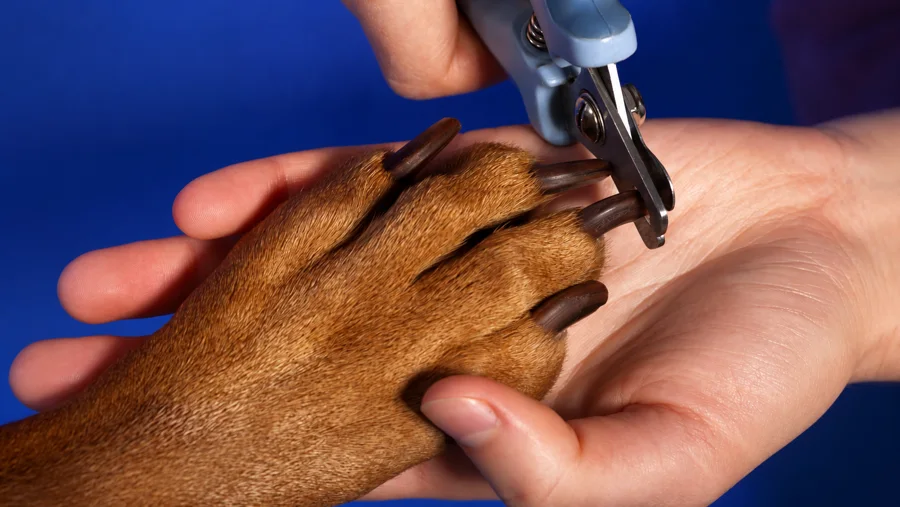
Common Paw & Nail Signs
These are common signs owners notice before trims are needed.
Choose the interval by the nails, not the calendar
Growth and wear vary with age, activity, surface and nail shape. Nails that click heavily, snag or alter how the toes meet the ground need attention; dewclaws receive little natural wear and should be checked separately. Frequent small trims are usually easier than waiting until a large amount must be removed.
Use a dog-sized clipper or grinder, bright light and a nonslip surface. On clear nails, stay well ahead of the pink quick. On dark nails, remove only a thin amount at a time and stop as the center of the cut surface changes. A groomer or veterinary team can demonstrate the angle for your dog.
Stop before fear becomes a fight
Practice paw handling, the sound of the tool and one-nail sessions with rewards. Do not pin down a panicking or snapping dog. Pain, a split nail, swelling, limping or bleeding that does not stop with gentle pressure and styptic powder needs professional advice.
Source checked: ASPCA dog grooming and nail-care guidance.
This page is for educational purposes only and does not replace veterinary advice. Always follow your veterinarian's guidance for testing, prevention and treatment decisions.