Dog Separation Anxiety - Signs & Calming Strategies
If your dog starts barking, pacing, drooling or destroying things when you leave, this is not usually a toy problem. It is often a panic problem.
The fastest first step for mild cases is to give your dog something calming and highly rewarding during departures, then build very short, low-stress practice absences from there.
Separation anxiety is more than simple boredom. It's a serious emotional response to being left alone. Understanding why it happens can help you support your dog.
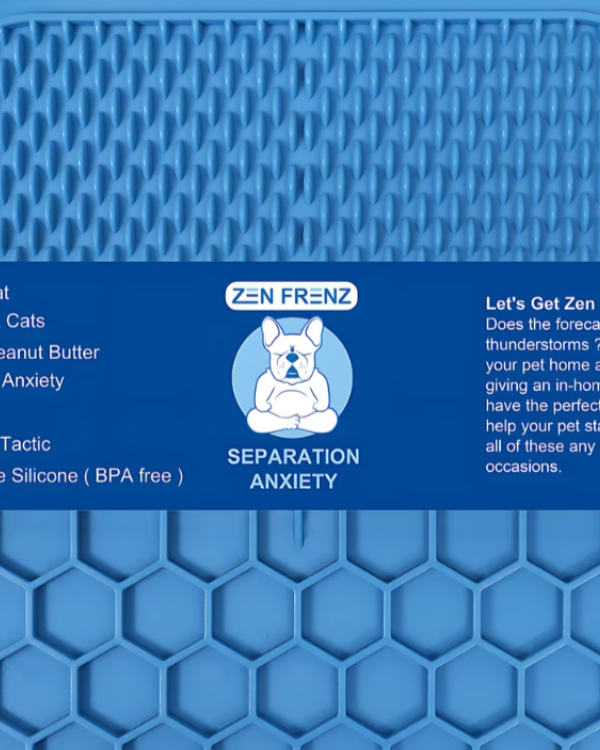
Best quick-start pick for dogs that panic when left alone
Zen Frenz Lick Mat gives your dog a calm, repetitive licking job during departures, grooming or stressful moments. It is an easy first tool because you can use it immediately while you work on short absences and training.
Check price on Chewy
Quick signs of separation anxiety
- The behavior starts when you leave, not randomly through the day.
- Your dog targets doors, windows or exit areas instead of just chewing general household items.
- Barking, pacing, drooling or accidents happen only during absences or right after you go out.
Signs of separation anxiety
Dogs suffering from separation anxiety show intense distress when left alone. Because these behaviors occur only during or right after departures, they are different from simple house-training issues or boredom. Look for the following signs:
- Destructive chewing or digging: Dogs may chew door frames, window sills, household objects or dig around exits in an attempt to escape. This can lead to injuries such as broken teeth and scraped paws.
- House soiling: Some dogs urinate or defecate when left alone; if they don't soil in the owner's presence, anxiety may be the cause.
- Persistent barking or howling: Separation-related vocalisation is continuous and isn't triggered by external sights or sounds.
- Pacing: Dogs may walk back and forth in a fixed pattern or circle when separated from their guardians.
- Excessive drooling or salivation and coprophagia: Some dogs drool or consume their own excrement when anxious.
- Escape attempts: Severe anxiety can drive dogs to break out of crates or scratch through doors and windows, risking serious injury.
Why it happens
Dogs are highly social and bond strongly with their guardians. Separation anxiety can develop after major life events, particularly in dogs adopted from shelters. Triggers include:
- Change of guardian or family: Being surrendered to a shelter or given to a new family can trigger anxiety.
- Change in schedule: Abruptly increasing the time a dog is left alone-such as switching from working at home to working away-may cause distress.
- Change in residence: Moving to a new home is a common trigger.
- Loss of a household member: The sudden absence or death of a family member may lead to separation anxiety.
- Sensitive personalities & breed predisposition: Some dogs are naturally clingy or prone to anxiety. Lack of independence training as a puppy can also contribute.
What usually helps first
Most dogs do better when you combine one calming departure activity with tiny practice absences that stay below panic level. The goal is not to "let them cry it out", but to teach that short departures are safe.
Training & management strategies
There is no quick fix for separation anxiety; treatment focuses on teaching your dog that being alone predicts good things. The following strategies are proven to help:
- Provide daily exercise & mental enrichment: A tired dog with a worked brain is more likely to relax. Long walks, trick training and scent games prepare dogs with mild separation intolerance to settle.
- Counterconditioning with food toys: For mild cases, offer a puzzle toy or stuffed KONG packed with high-value food that takes 20-30 minutes to finish just before leaving. Remove the toy when you return so the special reward is only available during departures.
- Practice pre-departure cues: If your dog becomes anxious when you pick up your keys or put on your coat, desensitise them by performing these actions without leaving.
- Gradually increase absences: Train out-of-sight "stay" exercises at interior doors, then progress to exit doors and one-to-two-second departures. Slowly lengthen separations, offering a stuffed food toy as a safety cue. Always keep sessions below your dog's fear threshold and back up if they show stress.
- Stay neutral during comings and goings: Keep departures and returns calm and low-key to reduce contrast.
- Consider professional help & medication: Moderate or severe separation anxiety requires a customized desensitization plan and may benefit from anti-anxiety medications under veterinary guidance. Consult a certified behaviorist for support.
Related resources
- Dog anxiety - broad overview of anxiety causes and treatments.
- How to stop destructive chewing - some dogs chew due to anxiety.
- Crate training guide - step-by-step crate introduction.
What to do next
Start with a departure routine your dog can enjoy, keep your first absences extremely short and build up slowly. If your dog injures itself, soils the house or panics hard, skip the DIY stage and speak to your vet or a qualified behavior professional.