Dog Diarrhea - Causes, Care & When to Call the Vet
Affiliate disclosure: we may earn a commission from purchases through links on this page, at no extra cost to you. How affiliate links work.
Diarrhea is a symptom, not a diagnosis. The useful first decision is whether your dog needs urgent care, not which supplement to buy. This guide summarizes warning signs and information to share with your veterinarian; it is not based on a BestPetsCo treatment trial.
If your dog has other issues, also read our dog anxiety guide.
This information is for general guidance only. Always consult your veterinarian for specific advice about your dog's health.
What is diarrhea?
Diarrhea means loose or watery stool, sometimes with increased frequency or volume. A veterinarian may distinguish small- and large-bowel patterns, but stool appearance alone cannot establish the cause or rule out serious illness.
Common causes
Diarrhea is a symptom of many different issues. Common triggers include:
- Dietary indiscretion: Eating rich or unfamiliar food, getting into the garbage or ingesting toxic foods like chocolate.
- Sudden diet changes: Switching your dog's food too quickly can upset their gastrointestinal tract.
- Stress: Emotional stress can upset digestion in dogs.
- Infectious diseases: Viral illnesses such as parvovirus or canine distemper can cause diarrhea.
- Internal parasites: Giardia, hookworms, roundworms, coccidia and whipworms are all parasites that can lead to diarrhea.
- Food allergies or intolerances: Some dogs react poorly to certain ingredients.
- Medications and medical conditions: Some medications and conditions like pancreatitis can cause diarrhea.
Where a probiotic fits
Check warning signs before shopping: blood or black stool, repeated vomiting, marked weakness, inability to keep water down, or suspected poisoning or a swallowed object need prompt veterinary advice. Puppies and dogs with medical conditions need a lower threshold for care. A probiotic is not the first response to these signs.
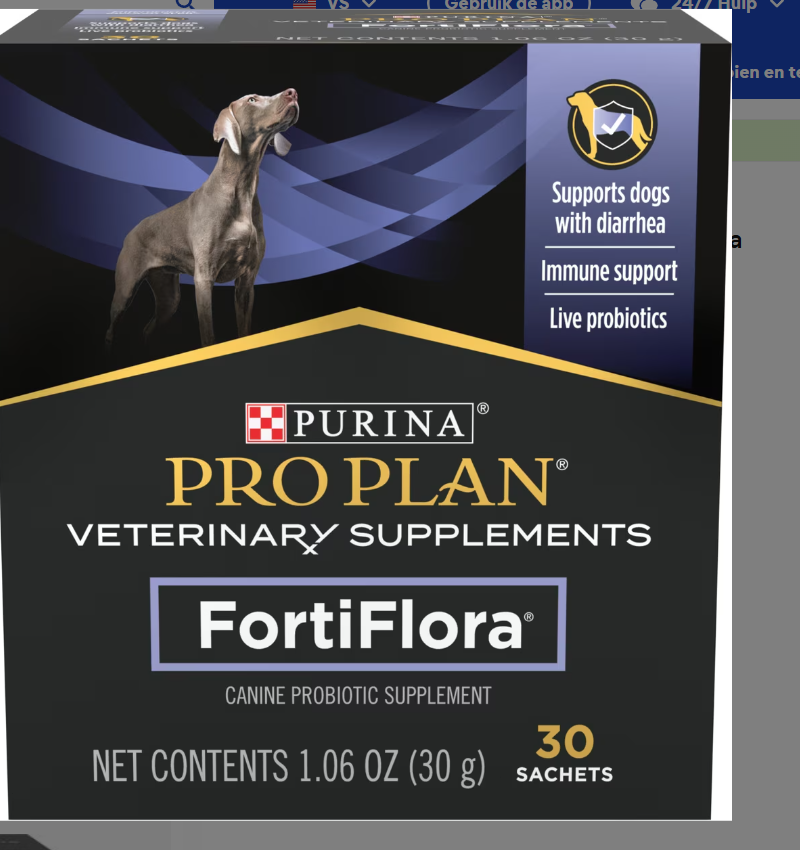
Purina Pro Plan FortiFlora Probiotic
FortiFlora is a canine probiotic supplement to discuss with your veterinarian. Whether a probiotic is appropriate depends on the cause; it does not replace assessment for dehydration, poisoning, infection or a swallowed object.
Check price on Chewy
Symptoms
Signs of diarrhea include watery or soft stools, increased frequency, straining to defecate, gas, abdominal cramps and occasionally vomiting. Black, tarry or bloody stools are red flags that warrant immediate veterinary care.
What to do while arranging advice
If your dog is alert and there are no urgent warning signs, contact your veterinary team for a feeding and monitoring plan suited to age, size and medical history.
- Keep fresh water available and monitor drinking, appetite, energy and stool frequency. Inability to keep water down needs prompt veterinary care.
- Do not start a blanket fasting routine, especially for puppies, very small dogs, diabetic dogs or dogs with other illnesses. Ask whether a temporary diet change is appropriate.
- Record when symptoms began, recent food changes, medications and possible access to garbage, toxins or toys. Ask whether to bring a fresh stool sample.
- Do not give human antidiarrheal medication or combine supplements without veterinary direction.
When to call the vet
Seek veterinary care if your dog's diarrhea:
- Contains blood or looks tarry (black).
- Is accompanied by vomiting, a lack of appetite or lethargy.
- Persists longer than 24-48 hours or occurs off and on for several days.
- Occurs in a puppy, senior dog or a dog with existing health conditions.
Suspected poisoning, a swallowed object, collapse or marked weakness warrants urgent veterinary advice; do not wait for a supplement to work. Diarrhea can cause dehydration, and vulnerable dogs can deteriorate quickly.
Source: Cornell Riney Canine Health Center: diarrhea.
Preventive tips
- Transition your dog's food gradually over 7-10 days.
- Keep garbage and toxic foods out of reach.
- Keep vaccinations and parasite prevention up to date.
- Avoid sudden stress by introducing changes to routine slowly.
See also
For more digestive and feeding guidance, explore these pages:
- Dog probiotics guide - compare intended uses and limitations of probiotic supplements.
- Slow feeder bowls - compare bowl formats for dogs that eat quickly; these do not guarantee prevention of bloat.
Return to the Dog & Cat Health Library
Related dog health guides
Helpful next pages for connected dog symptoms and routine care.