Dog Bad Breath - Causes & Fixes
Affiliate disclosure: we may earn a commission from purchases through links on this page, at no extra cost to you. How affiliate links work.
A whiff of "dog breath" is normal, but noticeably foul odor can signal health issues. Let's explore the causes and solutions.
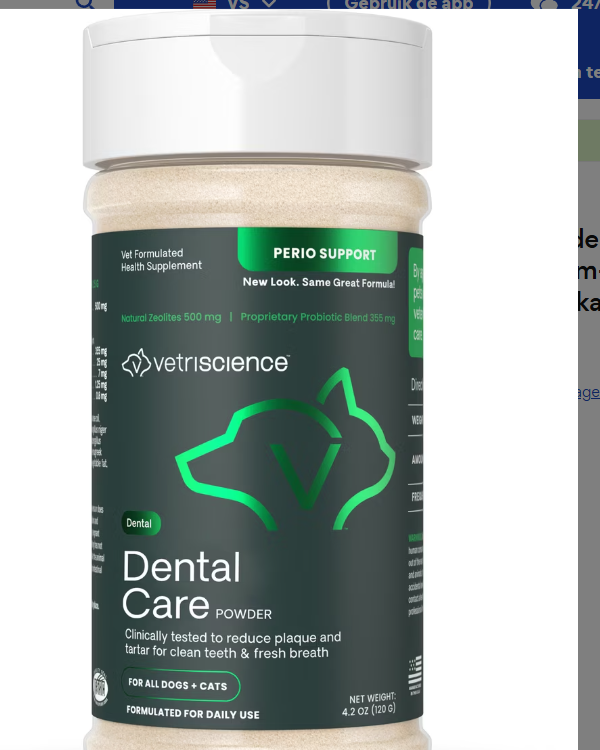
Freshen breath & support dental health
VetriScience Perio Support Powder - Powdered supplement you sprinkle over meals to help reduce plaque and tartar, freshen your dog's breath and support healthy gums.
Check price on Chewy
Common causes of bad breath
- Poor oral hygiene: Plaque and tartar build-up harbour bacteria that cause inflammation and infection. Over time this leads to periodontal disease, the most common cause of bad dog breath.
- Diet & unsupervised snacking: Dogs that raid garbage or litter boxes may develop foul breath.
- Medical conditions: Diabetes can make breath smell sweet or fruity; kidney disease can cause urine-like odor; liver disease may cause foul breath accompanied by vomiting and yellowish gums.
Prevention & treatment
- Brush your dog's teeth: Regular brushing removes plaque and prevents tartar build-up. Aim for several times a week.
- Provide dental chews & toys: Chewing helps scrape away plaque. Choose sturdy chew toys appropriate for your dog's size and chewing style.
- Regular vet check-ups: Professional dental cleanings may be necessary. Your vet can also check for underlying diseases causing bad breath.
- Monitor diet: Avoid letting your dog eat garbage, cat feces or rotten food.
When to see the vet
Contact your veterinarian if bad breath is accompanied by appetite loss, excessive drooling, broken teeth, bleeding gums or behavior changes. These could indicate dental disease or systemic illness.
Related reading
- Why dogs eat poop - another cause of foul breath.
- Dog itching - allergies and skin problems can contribute to poor hygiene.
- Dental treats guide - our picks for maintaining oral health.