KONG vs Nylabone: Rubber or Nylon for Your Dog?
Affiliate disclosure: we may earn a commission from purchases through links on this page, at no extra cost to you. How affiliate links work.
KONG Extreme is a hollow natural-rubber food toy. The Nylabone Power Chew Original is a hard, non-edible nylon bone. The main decision is whether you want a food activity or a hard chewing surface, and whether the latter is appropriate for your dog's teeth.

Comparison table
| Feature | KONG Extreme | Nylabone Power Chew |
|---|---|---|
| Material | Dense natural rubber | Tough flavored nylon |
| Shape | Hollow, stuffable cone | Bone-style chew |
| Best for | Supervised food enrichment | Hard-chew users after dental-suitability check |
| Removal cue | Cracked, damaged or missing rubber | Damaged, worn ends or too small |
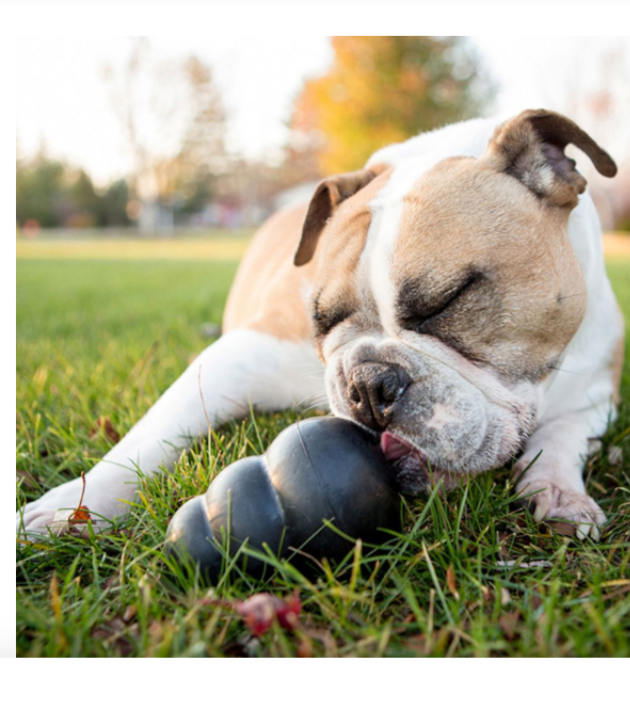 on Chewy |
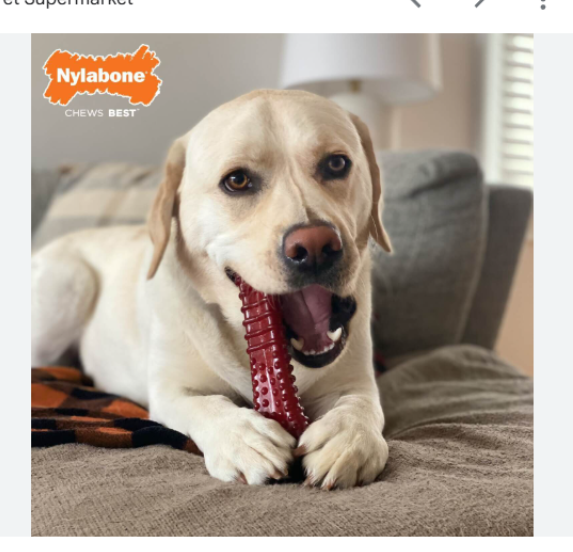 |
Which one should you choose?
Consider KONG Extreme when food is the reason your dog engages with a toy. It can hold part of a meal and be frozen according to the maker's instructions. Begin with an accessible filling so the task is not frustrating; there is no fixed session length guaranteed by the product.
Nylabone Power Chew provides a firm gnawing surface without a food cavity. That is a design difference, not a reason to prefer it for every strong chewer. Hard nylon can fracture teeth; veterinary advice may rule it out even when the manufacturer's weight range fits.
Safety and fit notes
- KONG is often better for dogs that shred softer toys but still enjoy bounce and movement.
- Nylabone is a chewing product, not an edible reward; stop if your dog removes or swallows pieces.
- Replace either toy when pieces break off or heavy wear appears.
- For another rubber design, compare this page with our Goughnuts vs KONG guide and full chew toy comparison.
More comparisons & resources: Benebone vs Nylabone, West Paw vs KONG, KONG vs Nylabone, Goughnuts vs KONG, and our Learn page.
Frequently Asked Questions
Which option supports a longer food activity?
A hollow KONG can be stuffed or frozen, so it usually offers more feeding and enrichment options than a solid nylon chew.
Which option is harder on teeth?
Nylon is much harder than rubber. Dogs with dental disease, worn teeth or a history of fractures may need a softer choice recommended by a veterinarian.
How should either toy be sized?
Use the exact model's weight, age and chewing-strength guidance. A toy must not be small enough to swallow; KONG separately advises sizing up for power chewers.
What changes after you bring it home?
With a KONG: remove food residue after use, check the hollow rim and body, and stop using it if rubber is damaged. Adjust the filling to your dog's ability instead of assuming freezing is always the best first step.
With a nylon bone: inspect both ends, the center and any roughened areas during each session. Nylabone says to replace a damaged chew, one with worn-down knuckles, or one that has become too small. A hard toy remaining in one piece does not prove that chewing it is harmless to teeth.
VCA's veterinarians identify hard, non-bending chew objects as a cause of fractures. If your dog drops food, chews on one side or has mouth pain, stop the activity and seek veterinary assessment. Neither a rubber toy nor a nylon chew substitutes for dental care.
Sources for product details: KONG Extreme product guide; Nylabone Power Chew Original; Nylabone use and replacement guidance; VCA veterinary guidance on fractured teeth. BestPetsCo compared published information; we did not perform a hands-on durability test.